Starbucks stock jumps as traffic grows—a phrase investors have waited nearly two years to hear. On Wednesday, shares of Starbucks climbed nearly 5% in early trading after the coffee giant reported quarterly results showing a rare but crucial milestone: customer transactions increased for the first time in two years.
Although Starbucks missed Wall Street’s earnings expectations for the fiscal first quarter, the market reaction underscored what investors value right now—proof that the company’s turnaround strategy is starting to bring customers back through the doors.
CEO Brian Niccol called the results an early validation of his “Back to Starbucks” plan, which emphasizes hospitality, operational efficiency, and reconnecting with both loyal and lapsed customers.
Mixed earnings, stronger signal
At first glance, the numbers were uneven. Adjusted earnings per share came in at 56 cents, slightly below analyst expectations, while revenue beat forecasts at $9.92 billion. Net income fell sharply year-on-year, pressured by restructuring costs, rising coffee prices, and tariff-related expenses.
Yet markets looked past the margin pressure. The real headline was traffic:
- Global same-store sales: up 4%
- Customer transactions: up 3%, first increase since fiscal 2022
- U.S. same-store sales: up 4%
- China same-store sales: up 7%
For a consumer-facing brand, traffic growth often precedes sustainable earnings recovery. That’s why Starbucks stock jumps as traffic grows mattered more than the near-term profit miss.
Why investors are paying attention
From an investor perspective, Starbucks’ update arrives at a sensitive time. Consumer discretionary stocks remain under scrutiny as inflation, wage pressure, and global uncertainty weigh on spending habits. Against that backdrop, Starbucks’ ability to lure customers back—both loyalty members and walk-ins—signals brand resilience.
CFO Cathy Smith told analysts that momentum has continued into January, reinforcing confidence that the improvement isn’t a one-off holiday spike. Starbucks also reinstated guidance after suspending forecasts in late 2024, projecting fiscal 2026 adjusted EPS between $2.15 and $2.40 and same-store sales growth of at least 3%.
That clarity alone helped calm markets.
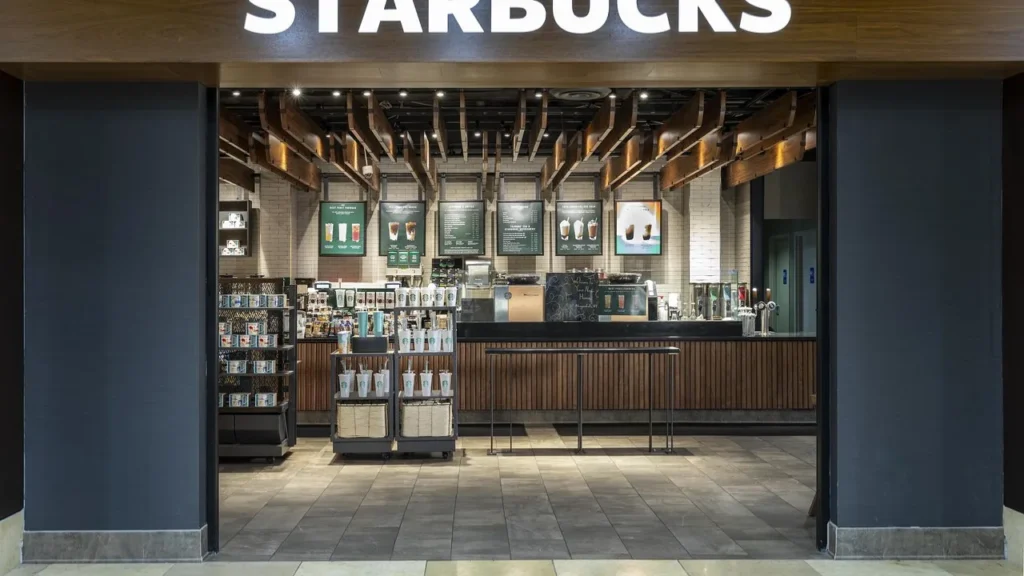
Inside the turnaround strategy
Niccol’s plan focuses less on aggressive discounting and more on experience-led growth. Several initiatives stood out this quarter:
- Green Apron Service: A renewed focus on hospitality and faster in-store execution
- Menu discipline: Leveraging classics like peppermint mocha alongside limited-edition holiday items
- Store optimization: Closing underperforming locations while selectively expanding
The company opened 128 net new stores during the quarter and plans to add 600–650 locations in fiscal 2026, following the closure of roughly 400 U.S. outlets last year. Investors see this as a shift toward quality over quantity.
China and global expansion remain key
Outside the U.S., Starbucks’ performance in China drew particular attention. The company’s second-largest market posted 7% same-store sales growth, and management confirmed plans for a joint venture with Boyu Capital to accelerate expansion.
If executed well, the partnership could reduce operational risk while maintaining Starbucks’ brand control—an approach analysts say could unlock long-term growth in Asia despite macro volatility.
Broader economic implications
Starbucks’ results also offer a window into broader consumer behavior. Rising foot traffic suggests discretionary spending may be stabilizing, at least for affordable indulgences like coffee. That’s encouraging for the restaurant and retail sectors, which often act as early indicators of economic sentiment.
For institutional investors, Starbucks’ recovery narrative may also influence valuations across the quick-service and café segments, especially for brands struggling with declining in-store visits.
What comes next
All eyes now turn to Starbucks’ investor day in New York, where executives are expected to outline long-term financial targets and detail how the turnaround scales beyond early wins. If traffic growth continues while costs normalize, analysts believe margin recovery could follow in late 2026.
For now, Starbucks stock jumps as traffic grows has reshaped the conversation—from whether the turnaround is working to how fast it can deliver sustained returns.
Reader question:
Do you think Starbucks’ renewed focus on in-store experience is enough to drive long-term growth, or will pricing pressure and global risks cap its recovery?